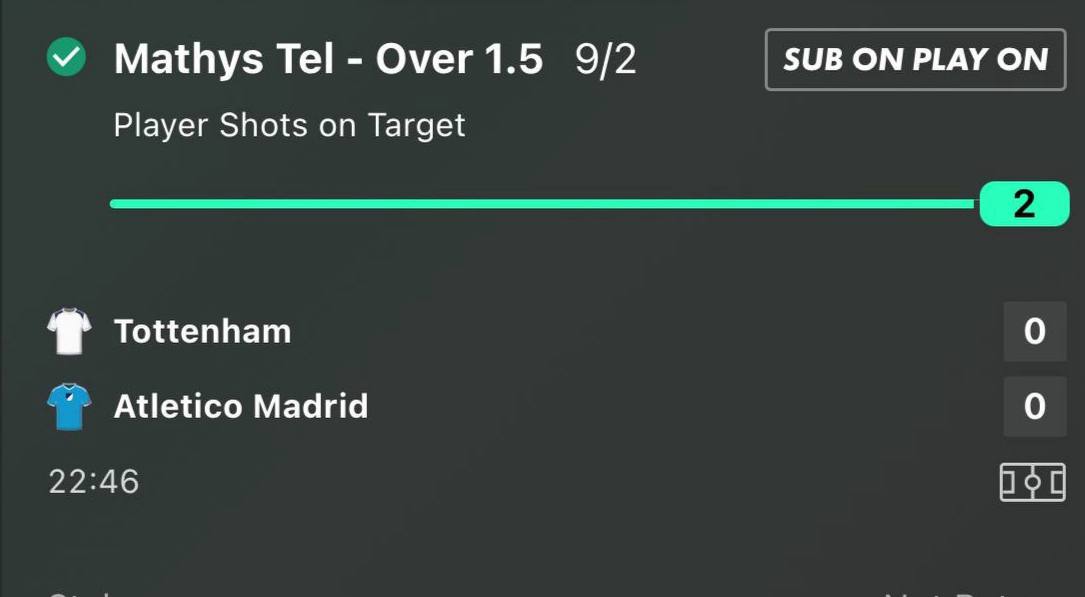
Player Shots on Target Betting Through Opta Definitions
Player shots on target betting is settled from a statistical definition rather than from every attempt that looks dangerous on screen. Bet365 uses Opta data for covered football markets and defines a shot on target around deliberate attempts that score, are saved, or are stopped by a last-line defender.
A shot on target needs a qualifying attempt
Bet365 defines a shot on target as a deliberate attempt to score that is on target. Goals count. Attempts saved by the goalkeeper also count, as do on-target efforts blocked by a last-line defender when that intervention prevents the ball from entering the goal.
The definition is narrower than any shot. Direction and outcome matter. A player can take several attempts during a match and still finish with a smaller shots-on-target number.
Woodwork does not automatically count
Bet365 states that a shot hitting the frame of the goal is classified as off target unless the ball subsequently enters the net. A powerful attempt against the post can therefore fail to increase the player’s shots-on-target total.
That rule often explains a difference between television commentary and official settlement. A dangerous chance is not necessarily a shot on target under the data definition used by the sportsbook.
Blocked attempts depend on the defender’s position
The published definition distinguishes a last-line block from other defensive blocks. An on-target attempt prevented from entering the goal by the last line can qualify. A shot blocked earlier with defenders or a goalkeeper still behind the blocker belongs to the broader shot definition rather than automatically becoming on target.
The defensive context changes the statistic. A visual record of the attempt is not enough without the event classification supplied by the data source.
Starting status can void the player market
Bet365 states that a selected player who does not start is normally void in its quoted player-stat markets, apart from listed rolling-substitution competitions. Starting status therefore matters before the first shot is even recorded.
A substitute who appears later can have a different settlement status from a starter under that rule. Checking the lineup is part of reading the market, not an unrelated team-news step.
Some player markets include extra time
Bet365 lists Player Shots on Target among player match markets that include extra time if it is played. Its match and team statistics markets, by contrast, are settled at the end of ninety minutes unless another rule changes the scope.
The market subject therefore changes the time window. A player-stat total can continue after normal time even when a team-stat market on the same event has already reached its standard settlement point.
Opta data controls covered settlement
Bet365 states that settlement for the listed statistical markets is determined by Opta, or by an official competition website outside the covered data set. William Hill also identifies Opta as the settlement source for its football stats markets.
That source hierarchy matters when broadcasts, live apps and final data feeds display slightly different counts. The bookmaker’s stated source, not the most convenient screen, controls the settled number.
Related markets should share the same statistical basis
Comparing a player shots-on-target price across sportsbooks works best when the participation rule, time window and data source are aligned. The same number can carry different practical boundaries if one operator includes extra time and another does not.
The settlement-first method also helps with first team to score betting and our FONBET football statistics review, where the event definition controls more than the label.